listicle
Best Fuel Card for Heavy Vehicles: 2026 Comparison
23 October 2026 · 14 min read
Table of Contents
- How We Evaluated the Best Fuel Card for Heavy Vehicles
- Quick Comparison: Best Fuel Cards for Heavy Vehicles
- 1. FuelPoint: Best for Volume Discounts and Local Support
- 2. EFS: Best for Trucking-Focused Security and Reporting
- 3. Comdata: Best for Large Fleets With Complex Controls
- 4. Fuelman: Best for Small to Mid-Sized Fleets
- 5. RTS: Best for Network Fit on Long-Haul Routes
- 6. TCS Fuel Card: Best for Stated Discount Locations
- Fuel Card Network Coverage: Why Route Fit Beats Location Count
- Fleet Fuel Reporting and Fuel Tax Credits
- Fuel Cards for Sole Traders and Small Operators
- How to Choose a Fuel Card for Heavy Vehicles
- Frequently Asked Questions
Last Updated: October 20, 2026
How We Evaluated the Best Fuel Card for Heavy Vehicles
Choosing the best fuel card for heavy vehicles comes down to one question: does it save your fleet more than it costs across the routes you actually drive? At FuelPoint, we assess every option on net savings after fees, not headline discounts.
Our criteria are simple and practical:
- Network fit: truck stops and diesel stops on your real routes, not just total site counts
- Fee structure: monthly, annual and transaction fees that erode advertised savings
- Controls: driver-level limits, product restrictions and card security
A fuel card for heavy vehicles is a payment and reporting tool for diesel purchases, typically offering pump-price discounts plus spending controls.
Quick Comparison: Best Fuel Cards for Heavy Vehicles
| Card | Best For | Network Strength | Fee Transparency |
|---|---|---|---|
| FuelPoint | Volume discounts and local support | 1,600+ locations | Clear, see pricing page |
| EFS | Trucking security and reporting | Trucking-focused | Contact provider |
| Comdata | Large fleets with complex controls | Established network | Contact provider |
| Fuelman | Small to mid-sized fleets | Broad business network | Contact provider |
| RTS | Long-haul route fit | Trucking routes | Contact provider |
| TCS Fuel Card | Stated discount locations | Discount site network | Contact provider |
1. FuelPoint: Best for Volume Discounts and Local Support
Our top pick for most heavy vehicle fleets is FuelPoint. As an authorised Shell Card sales agent, FuelPoint reviews your actual fuel usage to determine whether your fleet qualifies for volume-based discounts of 6-8 cents per litre, with access to over 1,600 locations nationally.
The practical advantage is consolidation: ATO-ready statements, spending controls by driver, vehicle or product, and reporting that simplifies GST and fuel tax claims.
Queensland-based account support matters too: when a card issue stalls a truck, a local contact resolves it faster than a national call queue.
Pros: volume discounts, ATO-ready statements, local support, strong reporting Cons: discounts are usage-dependent, so small fleets may qualify for less
2. EFS: Best for Trucking-Focused Security and Reporting
EFS appears consistently in trucking-specific comparisons, and security is the reason: card-level controls restrict purchases by driver, vehicle and product type.
Reporting is built around fleet fuel expense control rather than general business spend. If you run heavy transport with multiple drivers, EFS is worth a look, but verify Australian acceptance and coverage first.
Pros: strong security controls, trucking-focused reporting Cons: Australian coverage unverified, pricing requires direct enquiry
3. Comdata: Best for Large Fleets With Complex Controls
Comdata suits larger fleets needing layered spending controls and detailed transaction reporting.
For dozens of vehicles across multiple depots, granular controls reduce leakage. The trade-off is complexity: setup and administration take more effort than a simple card.
Pros: suited to large fleets, detailed controls Cons: more administrative overhead, Australian availability unverified
4. Fuelman: Best for Small to Mid-Sized Fleets
Fuelman is positioned for small to mid-sized fleets, and that framing holds up. If you run a handful of service vehicles, you do not need enterprise-grade controls.
The appeal is straightforward administration. The caution is the same as with any international provider: check network coverage on your routes and confirm fees in writing before switching.
Pros: simple setup, suited to smaller fleets Cons: Australian network coverage unverified
5. RTS: Best for Network Fit on Long-Haul Routes
RTS appears in trucking-focused comparisons where network fit is key. For owner-drivers and long-haul operators, route coverage matters more than total location count.
The caveat is verification. Supplied results do not confirm Australian availability, so treat RTS as a starting point for enquiry rather than a confirmed option.
Pros: trucking-oriented, network-fit focus Cons: Australian coverage unverified
6. TCS Fuel Card: Best for Stated Discount Locations
TCS is named in comparisons citing a large discount location network and a stated average discount, so you can see the claimed figures before enquiring.
Two cautions apply: the reported discount is in US gallons, which does not translate directly to Australian cents per litre, and Australian acceptance is unverified.
Pros: stated discount locations, clear claims Cons: discount figures not Australian, coverage unverified
Fuel Card Network Coverage: Why Route Fit Beats Location Count
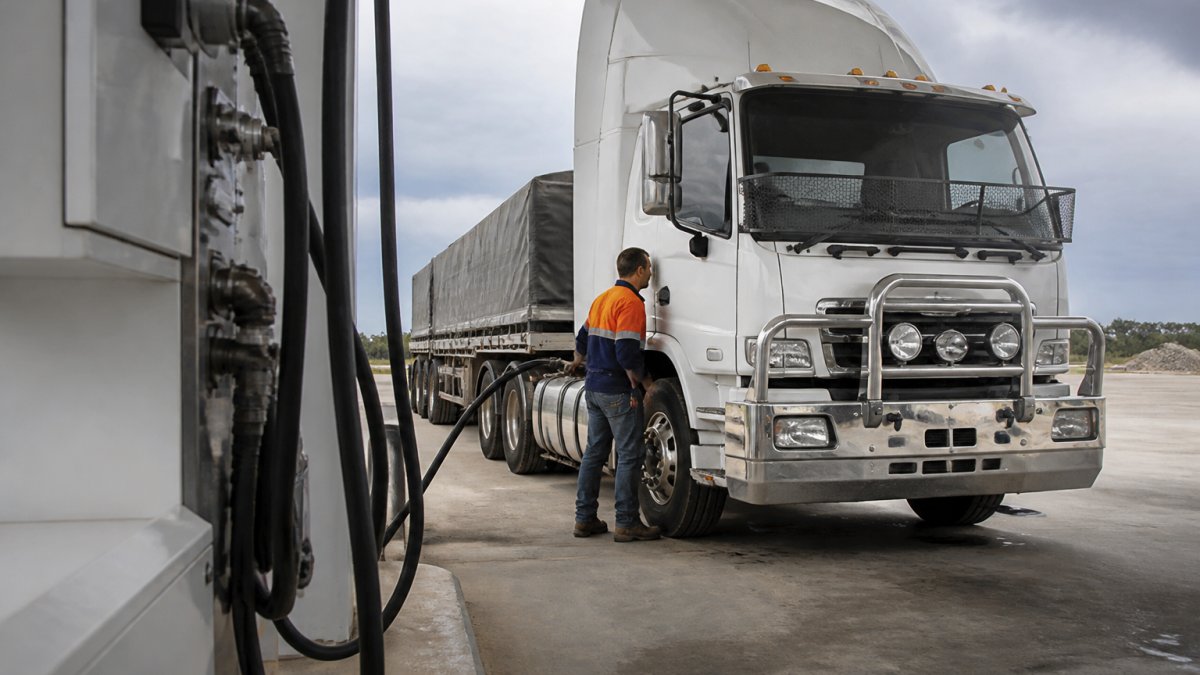
A card with thousands of sites is useless if none sit on your route. For heavy vehicles, coverage is not a single number, it is whether a site can physically and commercially serve a truck.
What 'coverage' actually means for a heavy vehicle
A site only counts as coverage if it meets all of these:
- High-flow diesel bowsers, standard car bowsers are slow and awkward for a prime mover or rigid truck; high-flow pumps cut refuelling time and reduce queue friction.
- Physical access, turning circles, apron space and exit clearance for a B-double or road train, not just a passenger car bay.
- Operating hours, 24-hour access matters on line-haul and overnight runs; a site that closes at 6pm is not coverage for a night shift.
A site count that includes service stations without high-flow diesel overstates real coverage. The useful metric is the number of sites on your routes that meet the criteria above.
How to map your routes against a card's network
Work through this in order:
- List your regular runs, depots, customer sites and the corridors between them.
- Mark every refuelling point you use, including truck stops, diesel stops and depot bowsers.
- Note the constraints at each point, high-flow availability, hours, AdBlue, access for your largest combination.
- Request the card's site list and filter it against your marked points, not the headline total.
- Identify gaps, any route segment with no qualifying site is a real risk, regardless of overall count.
- Ask about fallback, what happens at a non-accepted site, and whether there is a reimbursement or secondary-card process.
A smaller network that covers every corridor you run beats a larger one with a gap on your longest leg. The gap is where a truck runs late or a driver pays out of pocket.
Regional and corridor coverage
Heavy vehicles disproportionately rely on regional and inter-capital corridors, where site density is lower and distances between qualifying stops are longer. Two cards with identical national totals can have very different corridor coverage. Ask about:
- Truck stops on major freight routes rather than metropolitan service stations
- Regional diesel stops with high-flow bowsers
- AdBlue availability at or near refuelling points
Acceptance checks before you commit
Before signing, confirm in writing:
- The card is accepted at the specific sites on your routes, not just 'widely accepted'
- Whether in-store and at-bowser purchases are treated the same
- Whether AdBlue and other products are covered, and at what price basis
Network fit is the single largest driver of whether a heavy-vehicle fuel card works in practice. Get it wrong and no discount rate compensates for detours and downtime.
Fleet Fuel Reporting and Fuel Tax Credits
Fleet fuel reporting is the back-office half of the decision, and where cheap cards often fail. You need structured reports showing litres by vehicle, date and site, because fuel tax credit claims depend on accurate records.
How fuel tax credits work in practice
The Australian Taxation Office administers fuel tax credits. In broad terms, a business may be eligible to claim a credit for fuel tax included in the price of fuel it acquires and uses in eligible activities. Eligibility depends on:
- Vehicle type and gross vehicle mass, heavy vehicles on public roads are treated differently from light vehicles, with thresholds that change what can be claimed.
- Fuel type, diesel, petrol, LPG and other fuels are treated differently, and some fuels or uses are excluded.
- Business versus private use, only the business-use portion is claimable, so records must separate the two.
Rates and eligibility rules change, so confirm current rules and rates through the Australian Taxation Office fuel tax credits guidance before relying on any estimate. This section explains the mechanics and the record-keeping; it does not substitute for the ATO's current guidance.
The records a claim depends on
A fuel tax credit claim is only as good as the records behind it. For each claim period you need to show:
- Litres acquired, by fuel type
- Date and site of each purchase
- Vehicle or equipment the fuel was used in
Manual dockets and spreadsheets can meet these requirements, but they are slow, error-prone and hard to audit, which is where a fuel card's reporting earns its keep.
How card reporting supports a claim
A well-run fuel card produces transaction data that maps closely to the records a claim needs:
- Litres by vehicle, card-to-vehicle assignment gives a per-vehicle figure without manual sorting
- Litres by site and date, supports reconciliation against supplier invoices
- Product breakdown, separates diesel from AdBlue and other products, which are not treated the same for credit purposes
Clean, exportable data makes claiming far easier than manual dockets; messy data shifts the work back onto your admin team.
Questions to ask a provider about reporting
Before committing, ask:
- Can reports be filtered by vehicle, driver, site and product?
- Are statements exportable to accounting software, and in what formats?
- How far back does transaction history go, and can historical periods be re-exported?
- Does the reporting separate fuel types and non-fuel purchases?
- Can reports be scheduled to align with your claim periods?
Reporting is not a nice-to-have for heavy vehicle fleets. It turns fuel purchases into a defensible claim and a clean GST position, paying back every claim period.
Fuel Cards for Sole Traders and Small Operators
Fuel cards for sole traders follow the same logic at smaller scale. With one or two vehicles, monthly card fees can outweigh discounts, so check the fee structure carefully. Look for low or no monthly fees, simple controls and statements you can hand straight to your accountant, volume-based discounts are usually modest for small fleets, so reporting and GST benefits often matter more than the cents-per-litre figure.
How to Choose a Fuel Card for Heavy Vehicles
Work through these steps before you sign anything:
- Map your routes and list every refuelling point, including truck stops
- Total your litres from three months of statements
- Request fee schedules in writing for monthly, annual and transaction fees
- Check payment terms and billing cycle against your cash flow
- Confirm reporting supports GST and fuel tax credit claims
- Test controls by setting driver and product restrictions
- Ask about exit terms before you commit
Frequently Asked Questions
Can a sole trader get a fuel card for a heavy vehicle?
Yes. Sole traders can apply for fuel cards for sole traders, including cards for heavy vehicles, though providers assess applications differently. You will typically need an ABN, a valid driver licence, and details of your vehicle and expected fuel spend. Some providers require a personal guarantee or a deposit. Compare annual card fees, transaction fees, and whether the card is accepted at the truck stops on your regular routes before you apply.
Which fuel card saves the most money for a truck fleet?
The card that saves the most is the one with the lowest total cost after discounts, fees, and surcharges. A card advertising a large cents-per-litre discount can still cost more if it charges high monthly fees or is not accepted where your trucks fuel. Add up the monthly card fee, annual fee, transaction fees, and any non-network surcharges, then subtract the discount you expect on your actual litres. FuelPoint, for example, offers volume-based discounts of 6 to 8 cents per litre for qualifying fleets.
Can heavy-vehicle fuel cards be used across a national network?
Many heavy-vehicle fuel cards are accepted across a national network, but coverage varies by provider and by route. A card with thousands of locations may still have gaps on remote routes or at the specific truck stops your drivers use. Check the provider's site locator against your regular runs, including overnight stops and depot refuelling points. FuelPoint, as an authorised Shell Card sales agent, provides access to a national network of over 1,600 locations.
What should a business compare when choosing a heavy-vehicle fuel card?
Compare five things: the discount in cents per litre on your actual fuel volume, all fees including monthly card fees and transaction fees, network coverage on your routes, reporting quality for GST and fuel tax credits, and payment terms. Also check card security features such as driver and vehicle restrictions. Ask for a written summary of fees and a sample statement so your finance team can see how the reporting works before you switch.
How can a fuel card help manage truck fuel use?
A fuel card gives you transaction-level data by driver, vehicle, and product, which makes it easier to spot unusual fuel consumption, unauthorised purchases, and outliers between trucks on similar routes. You can set spending controls, restrict cards to certain fuel types, and require odometer entry at the pump. Structured reports feed directly into fleet fuel reporting, simplifying GST claims and fuel tax credit records. That visibility usually reduces fuel expenses more than the discount alone.
Heavy vehicle fuel costs are one of the largest controllable expenses in any fleet, and the wrong card quietly erodes margin through fees and network gaps. FuelPoint helps Queensland fleets cut that waste with volume-based discounts of 6-8 cents per litre, access to over 1,600 locations and ATO-ready statements that simplify GST and fuel tax claims. Our local team manages a zero-hassle transition so your trucks keep moving. Get started with FuelPoint and put your fuel spend back under control.
Want this reviewed against your own fuel spend?
FuelPoint is an independent authorised Shell Card sales agent for Viva Energy Australia, serving Queensland businesses. We review your current fuel arrangement and help establish the right Shell Card setup with a zero-hassle transition.
Book a 15-minute fuel spend review